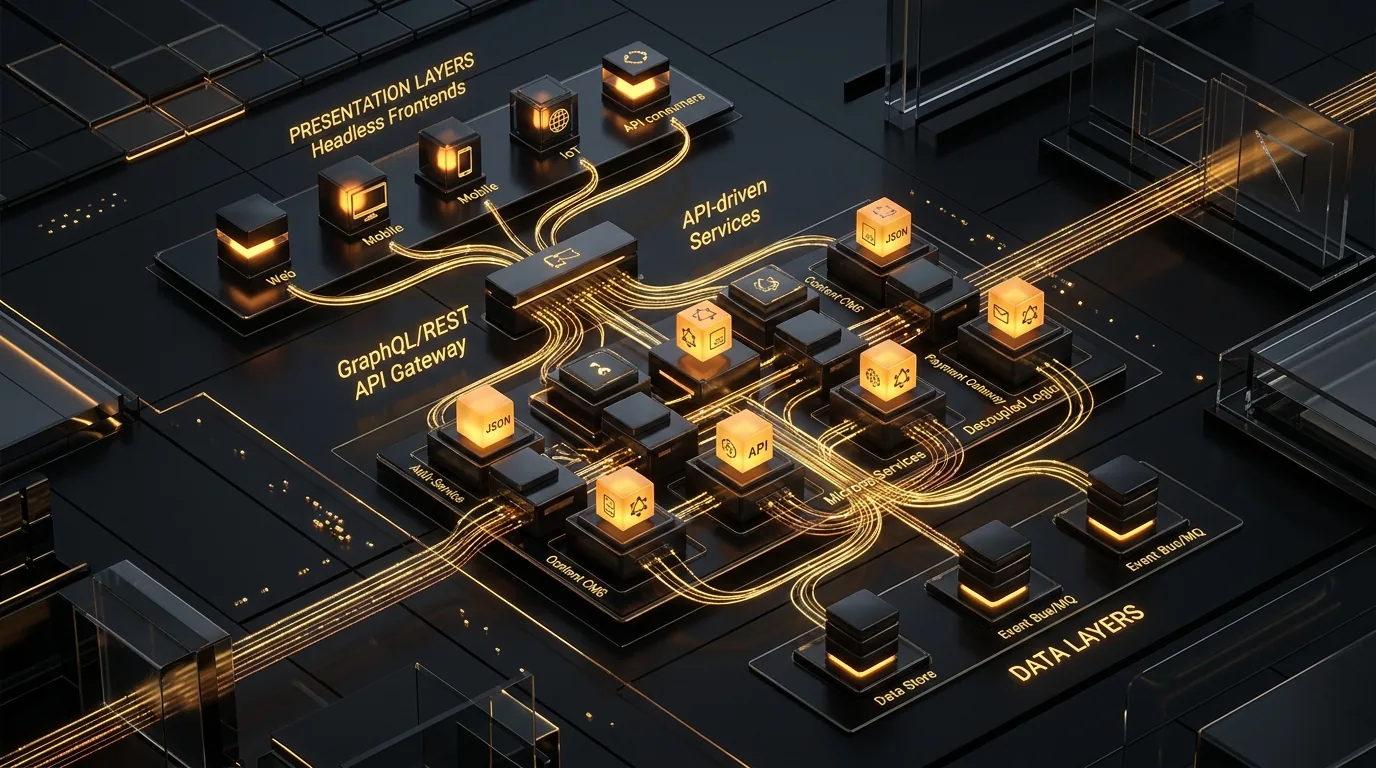
For nearly two decades, monolithic content management systems - where the database, server rendering, plugin ecosystem, and HTML output live inside a single execution context - were the default choice for building websites.
In 2026, that paradigm has fundamentally shifted. High-growth brands and discerning studios now overwhelmingly choose headless and static-first architectures.
Here is an architectural breakdown of why this shift occurred, and what it means for your business.
The Hidden Cost of the Monolithic Monolith
When a visitor requests a page on a traditional monolithic website:
- The server receives the incoming HTTP request.
- The CMS executes tens or hundreds of database SQL queries to assemble header menus, sidebar widgets, posts, and comments.
- Multiple third-party plugins inject render-blocking scripts and unoptimized styles into the
<head>. - The server compiles the HTML dynamically on every request.
If ten thousand visitors arrive simultaneously during a press release or product drop, the database hits a connection ceiling, TTFB (Time to First Byte) spikes from 200ms to 4,000ms, and servers crash.
The Headless Advantage: Decoupling for Scale
In a headless architecture:
- Content Management: Managed via a secure, headless API or internal database.
- Frontend Presentation: Pre-compiled static HTML/CSS/JS deployed globally across edge content delivery networks (CDNs).
- Security: The database has zero public internet exposure. There is no admin login portal accessible on the public root domain to brute force.
[ Headless Content API ] ---> [ Build Pipeline: Astro / SSG ] ---> [ Global Edge CDN ] ---> [ Instant Visitor Load (40ms) ]
Key Business Outcomes
- Sub-Second Global TTFB: Assets are served from edge nodes physically nearest to the visitor (e.g. Frankfurt, Mumbai, San Francisco, Tokyo).
- Zero Database Downtime: When traffic surges 100x, edge CDNs absorb the load seamlessly with zero server cpu spikes.
- Superior Core Web Vitals: No bloatware plugins running background cron tasks on user visits.
At Studio Ravya, every client platform is built headless and static-first for lasting speed and resilience.