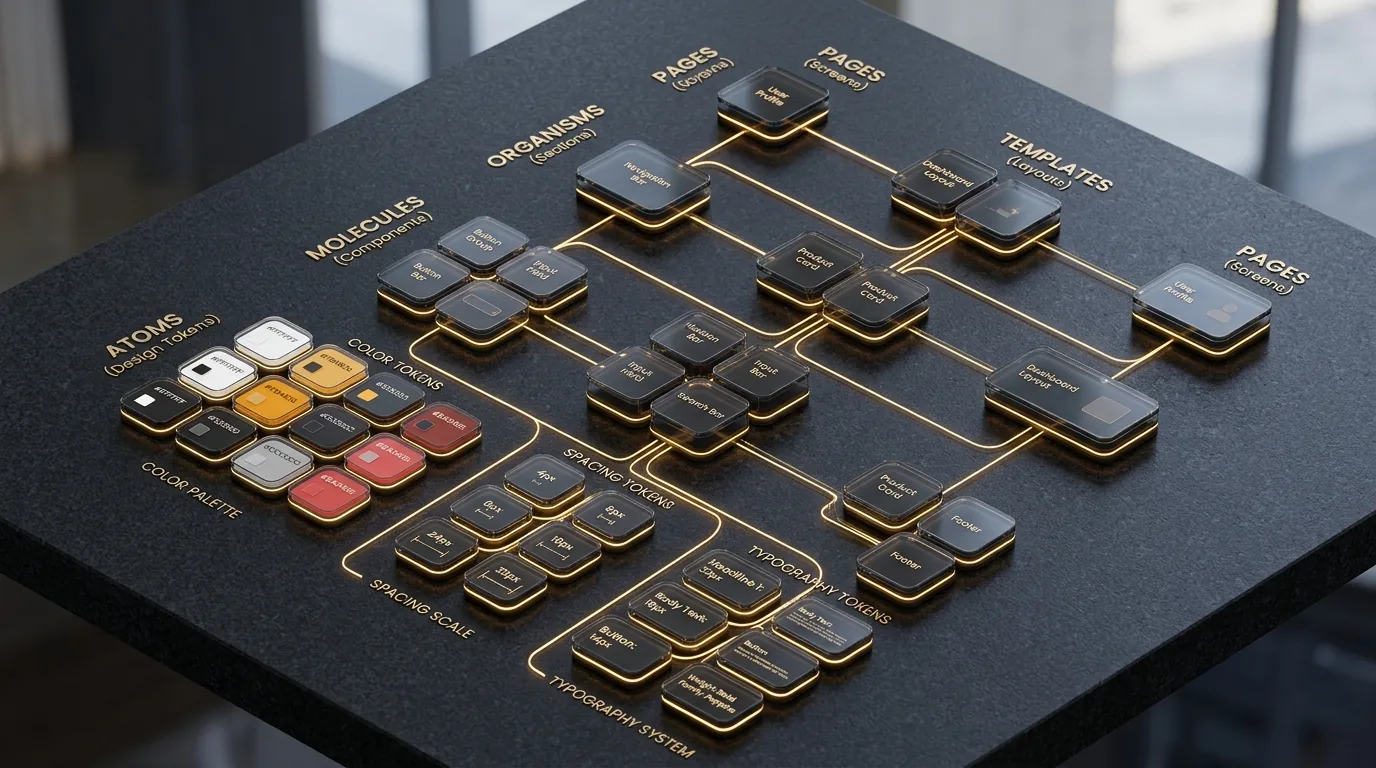
As a business grows, maintaining visual consistency across its marketing websites, landing pages, documentation portals, and internal tools becomes an escalating challenge.
Without a centralized design system, different developers and designers introduce slightly different shades of primary colors, conflicting button border radiuses, and fractured typography scales.
The solution is establishing semantic design tokens from day one.
What Are Design Tokens?
Design tokens are the atomic visual attributes of your brand - colors, spacing, typography, radii, elevation shadows - stored as platform-agnostic key-value pairs.
{
  "color": {
    "brand": {
      "solar": { "value": "#F5A623" },
      "charcoal": { "value": "#120E0A" },
      "amber": { "value": "#E08B10" }
    }
  },
  "spacing": {
    "gutter": { "value": "1.5rem" }
  }
}
When tokens are imported into Tailwind CSS, CSS Custom Properties, and Figma styles, any global design refinement cascades automatically across your entire digital ecosystem.
The Benefits of Semantic Token Architecture
- Effortless Theme Switching: Implementing true nocturnal dark themes or high-contrast accessibility modes requires only remapping token assignments, not rewriting CSS classes.
- Accelerated Development Velocity: Developers stop guessing whether a margin should be
14pxor18px; they strictly use standardized spacing tokens (spacing-4,spacing-6). - Protected Brand Equity: The brand looks identical whether a customer opens a marketing email, a flagship landing page, or a private SaaS dashboard.
Build with systems, not with isolated one-offs.