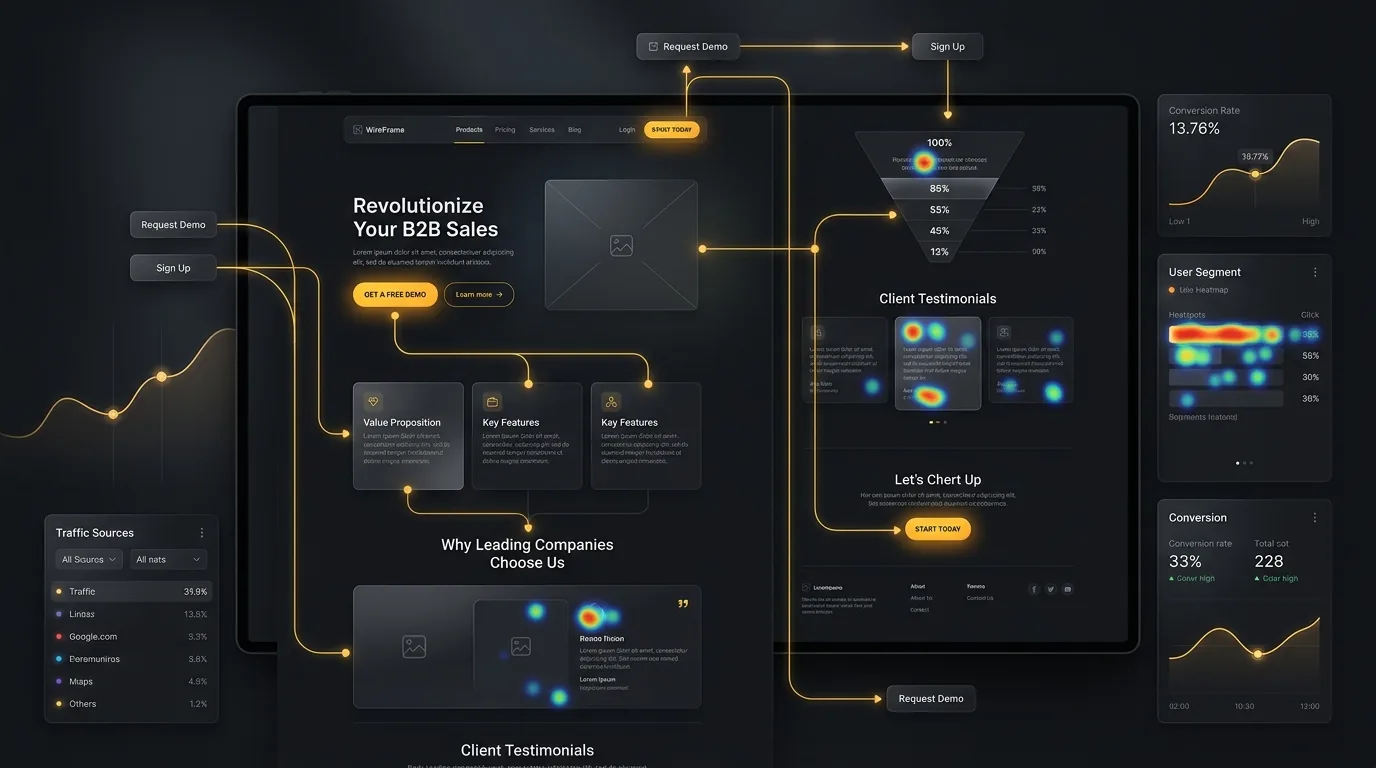
Most B2B landing pages convert between 2% and 4%. When a landing page consistently converts at 15% or higher, it isn't luck or aggressive sales tricks - it is the result of deliberate cognitive architecture.
Here is the exact structural framework we use at Studio Ravya to engineer high-velocity landing pages.
1. The 5-Second Clarity Test Above the Fold
Within five seconds of landing on your page, a qualified prospect must understand:
- What you offer (in plain, concrete language)
- Who it is for (identifying their specific role or operational scale)
- The primary transformation (the quantifiable outcome they receive)
- The immediate next action (a distinct, low-friction primary CTA)
Avoid nebulous corporate jargon like "Empowering holistic synergy across tomorrow's enterprise." Instead, say: "We engineer bespoke digital flagship websites for funded tech companies in 6 weeks."
2. Cognitive Pacing: Structuring the Visual Narrative
A great landing page follows the rhythm of a masterclass sales conversation:
[ Hero: Unmistakable Value Proposition ]
       ↓
[ Proof Ticker: Recognized Logos & Metrics ]
       ↓
[ The Core Struggle: Why Existing Solutions Fail ]
       ↓
[ The Architecture: How Your Approach Wins ]
       ↓
[ Interactive Showcase: Concrete Artifacts & Case Studies ]
       ↓
[ Clear Scoping / Pricing Breakdown ]
       ↓
[ FAQ: Neutralizing Every Latent Objection ]
       ↓
[ Primary Conversion Terminal / Intake Form ]
3. Eliminating Form Friction
For B2B lead generation, every form field added decreases conversion by an average of 4.5%.
- Ask only for what is necessary to qualify the conversation: Name, Work Email, Project Scope, and Budget Range.
- Save company size, phone number, and physical addresses for the subsequent discovery call.
By respecting your prospect's cognitive bandwidth, you command their trust.